
Case Studies
Three Real Journeys. Four Standing Rules.
For about a decade we have taught under four rules, stated up front: no memorization. No practice. No homework. No long hours. The results are what make those rules credible — children learn faster and better, keep what they learn, and end up working on concepts a couple of grades ahead. Here is what that looked like for a grade-9 topper from the US, a grade-6 from India, and a grade-2 pre-reader from the US.

The Topper With Good Grades — and Missing Foundations
His parents brought us a topper: strong report card, packed schedule, praised as very intelligent. In the first sessions we found what we find, universally, in toppers — gaps in basic concepts at his own grade level. The grades were real; the foundations weren't. Not his fault: memorization had bought the marks and quietly skipped the understanding. So we started at his own grade and rebuilt — we don't accelerate by skipping.
- About three years on, he works comfortably with calculus, vectors, geometry, probability, and statistics — grade 11 and 12 topics, a couple of grades ahead of school.
- This summer he is learning AI/ML in Python with scikit-learn, TensorFlow, and PyTorch — and he understands what the models are doing, because the math underneath is his own.
- Programming in Python stays a medium, not a goal — a faster way into Math, Physics, Chemistry, and Geography.
- Throughout, the four rules held — one focused hour at a time, 12 to 16 live sessions a month, and nothing sent home.

From Weak English to Top of the Class — Without a Single Word List
An average student at a reputed English-medium school: very poor spoken and written English, middling math and science. He started with a weekend batch — and later added a second. No word lists to memorize, no homework between sessions.
- Rebuilt through analytical reading — taking sentences apart and reasoning about them, never memorizing them. Two years later he reads Sherlock Holmes for fun and sits at the top of his class.
- The same method carried his math — he now works out geometry and series himself in Python, grades-ahead territory reached in the same few hours a week, not more of them.
A Pre-Reader Who Now Writes Her Own Python Plots
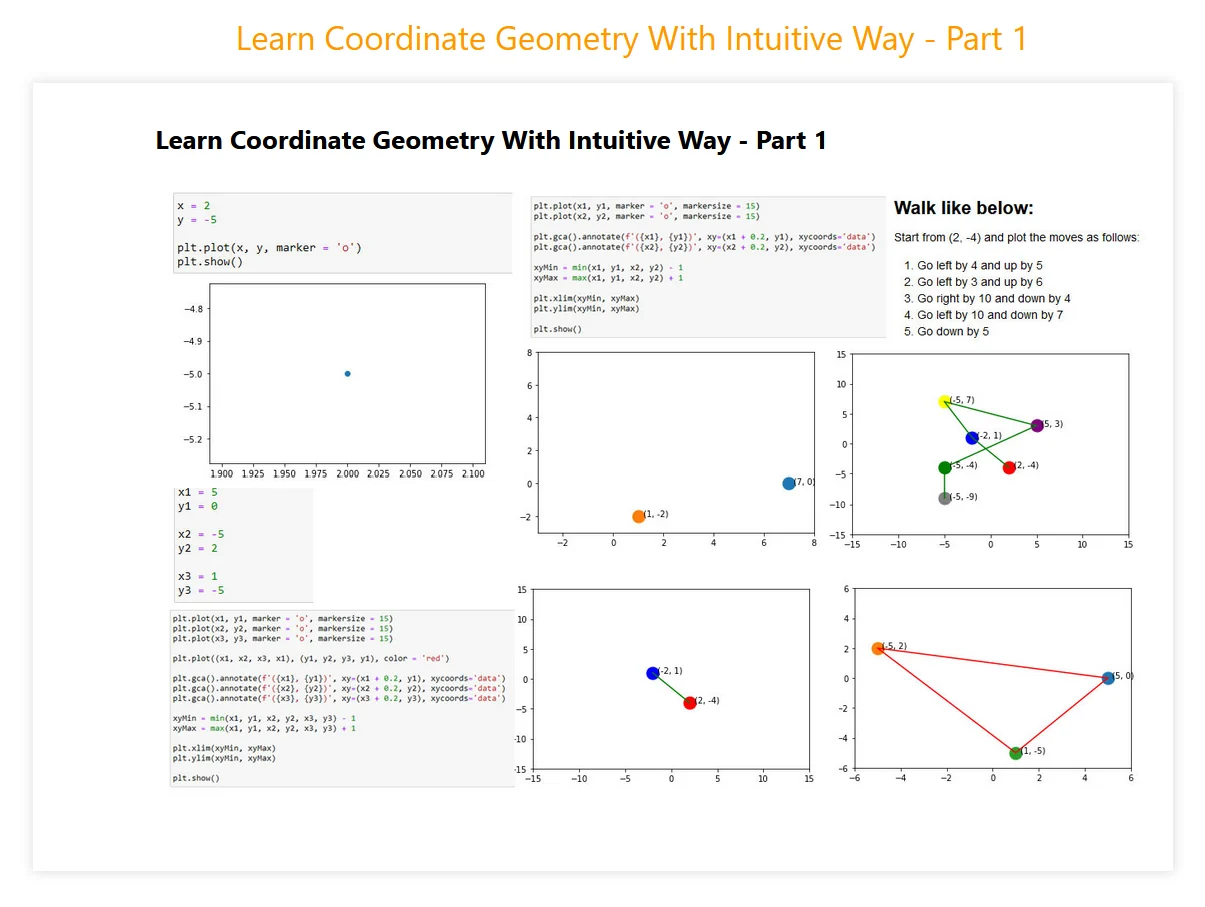
When she joined, she could count 1–100 — but not in reverse — and struggled to read or write even small words. Her sessions look like play — watching, clicking, even dancing — because that is how a seven-year-old holds attention for one full hour; nothing goes home to drill, nothing is memorized. One year later she plots points in Python.
Help Within Arm's Reach
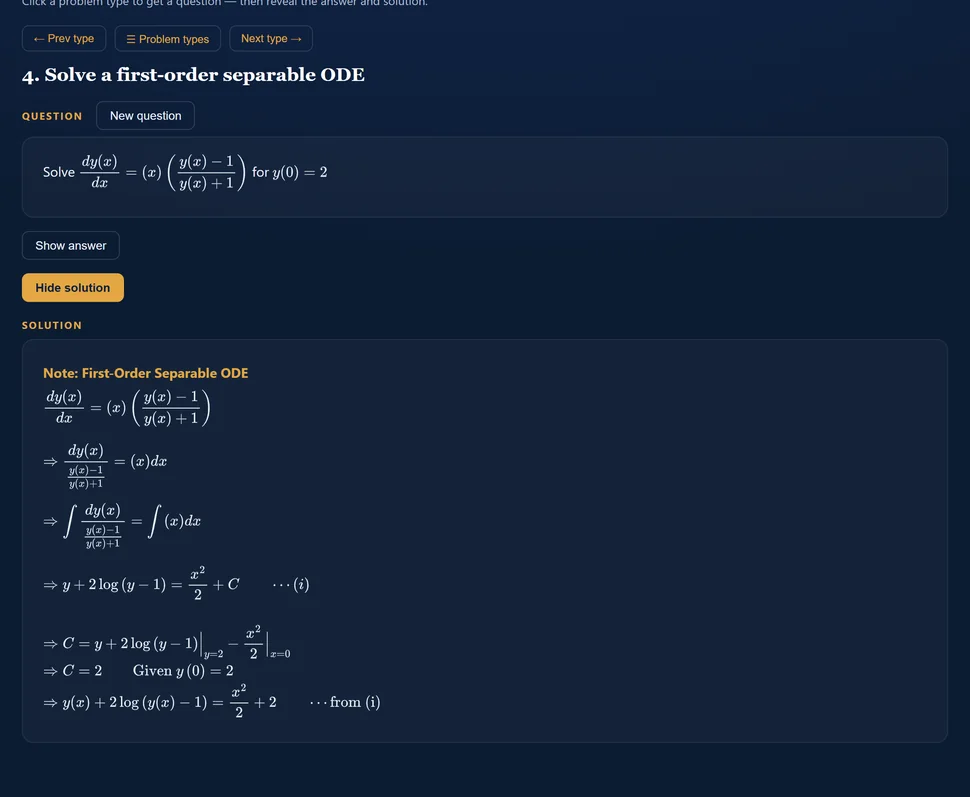
Every concept lives in one interface built for her. When she couldn't read a word, voice support spoke it with a click. Every "Make Grid" produced a fresh question she had never seen — nothing to memorize, nothing repeated.
She Writes Code Too
In a notebook she runs arithmetic expressions, checks the results against her own counting, retries her mistakes, and plots points with matplotlib — taking charge of her own learning.
From One Question to Fifteen
At first, one or two new arithmetic questions filled a whole hour. Now she clears about 15 a session — every one new, none a repeat. That is learning faster without the drilling.
Marks Measure Memory. We Train Thinking.
What we train is the ability to handle problems they have never read before — and it is why all three children can face fresh, unseen questions and answer them.
Almost Perfect Recall
What you can derive, you cannot forget. When a topic slips, it is re-derived in minutes — not re-crammed for weeks. That is how these children keep what they learn with no homework at all.
Checking, Not Repetition
No practice does not mean no reinforcement. Our platform generates questions that practically never repeat, marks typed or handwritten answers instantly, and keeps a per-topic record parents can open — Revise, Test, Retest. One fresh question a student has never seen proves a concept better than fifty copies of the same sum.
Not Outliers
Their batchmates kept pace. None of the three started ahead — the grade-6 arrived with weak English, the grade-2 could barely read, and the grade-9's strong grades hid gaps at his own level. The method — not the prodigy — is what repeats.
Read the Full Journeys
Slide-by-slide case studies with screenshots from real sessions, anonymized. More available on request.
An early start compounds.
Children here cover their own grade quickly and keep moving — that is how "a couple of grades ahead" happens without long hours. Start earlier and the runway to the SAT, Olympiads, and college grows; most families find they no longer need coaching on the side.
Bring us your topper, or your struggling reader. The first sessions will show you where the foundations really stand.